After RMG, could the economy send more Bangladeshis back to the streets?
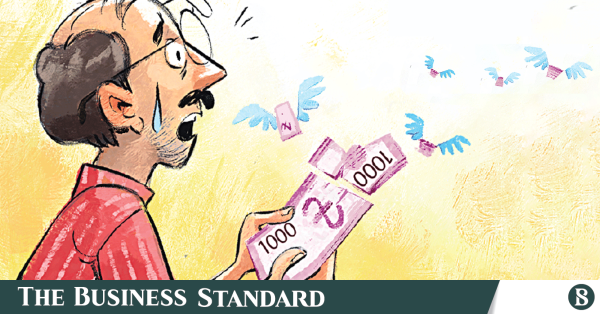
Inflation is eroding purchasing power, investment remains weak and employment opportunities are scarce. Unless the government addresses these pressures, economic frustration could spill back onto the streets
 Collected · Not taken by usCollected
Inflation is eroding purchasing power, investment remains weak and employment opportunities are scarce. Unless the government addresses these pressures, economic frustration could spill back onto the streets
Over several days in early November, garment workers blocked roads across Gazipur, Savar, Ashulia and Narayanganj. Factories were vandalised. Vehicles were torched. Police used force. The Border Guard Bangladesh was deployed. At one point, production was suspended at 529 factories, affecting nearly 987,000 workers. The movement escalated unnaturally fast, and the tension has yet to ease. The risk is not confined to the ready-made garment (RMG) sector. It now looms over other sectors as well, as the cost of living keeps rising and families feel the pinch of inflation more sharply than before.
And it has strong political ramifications. Bangladesh emerged from the July Uprising with a changed political order, and the two successive administrations inherited a broken economy left by the previous Awami regime. The banking crisis remained. Investment remained weak. Energy shortages continued to constrain production.
Inflation kept eating into real wages. The formal job market remained unable to absorb the country's young people. And now the question arises whether all of these factors could trigger an outburst on the streets, as global examples have shown in recent months.
July's economic roots were never removed
One of the key factors influencing the July Uprising was the economy. There was hope that once the corrupt, autocratic regime was removed, the economy would see better days. But that has not quite been the case.
Point-to-point inflation stood at 8.34% in September, rising from 8.26% in August. Inflation has remained above 8% for years, while wage growth has repeatedly failed to keep pace.
The outlook is worse. The World Bank projects growth of only 3.4% in both FY2025–26 and FY2026–27, citing weaker investment, slowing exports, energy constraints and financial-sector vulnerabilities. The IMF has cut its FY2026–27 growth projection to 3.2% while forecasting average inflation of 10.9%.
That combination of weak growth, high inflation and poor employment creation is the substance of stagflation, even if policymakers prefer less alarming vocabulary.
Jyoti Rahman, an applied macroeconomist and chairperson of the Panam Institute, argued that the economy has struggled to regain stability since the Covid-19 lockdowns. Remittances may have remained comparatively strong, but several other components of the national accounts have been weak.
"The economy has subsequently been hit by one shock after another, none of which we have managed effectively," he said.
The Hasina government, Rahman said, allowed capital flight and longstanding structural weaknesses to deepen. But the crisis was not confined to macroeconomic management. It also altered the relationship between education, aspiration and employment.
He added, "Public universities expanded across the country. Degrees became more accessible. Yet the expansion was frequently driven by political considerations, without equivalent improvements in teaching quality or labour-market relevance. Graduates emerged carrying certificates and entirely rational expectations of respectable work but entered an economy that did not have enough suitable jobs for them. It was an aspiration trap."
Asif Shahan, professor in the Department of Development Studies at the University of Dhaka, said, "The latest Bangladesh Bureau of Statistics (BBS) survey suggests that monthly household expenditure is higher than monthly income. By my calculation, this appears to be the case for around 47% of people. This points to a difficult economic situation."
He added, "There is a possibility that political actors will try to exploit this situation, and that various groups will seek to capitalise on public discontent. But how serious the crisis becomes will depend, to a large extent, on the government's response."
Bangladesh is not alone, but it is more fragile
Across Europe, protests have spread through France, Spain, Italy, Portugal, Albania, Greece, Germany, and Belgium, triggered by unaffordable housing, deteriorating schools, weak public services, education costs, falling real wages and anxiety over young people's futures.
সংবাদ সূত্র
এই বিভাগের আরও খবর
 Collected · Not taken by usCollected
ব্যাংকের সিনিয়র অফিসার পদে লিখিত পরীক্ষায় ডিভাইসসহ বহিষ্কার ২৪
২৭ নভে, ১০:০৬ PM Collected · Not taken by usCollected
এক লাফে ৩ শতাংশের বেশি বাড়লো স্বর্ণের দাম
২৭ নভে, ০৭:৪৬ PM Collected · Not taken by usCollected