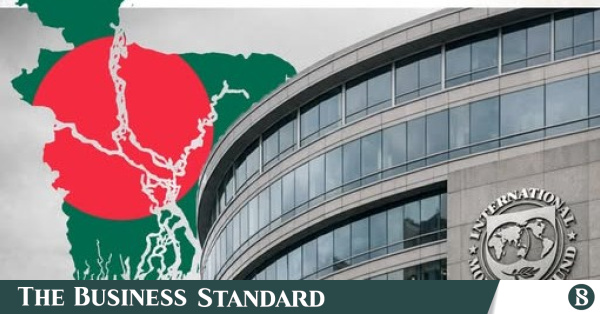
Bangladesh hopes to finalise new IMF loan framework by January-February
The initiative signals a move away from simply continuing the previous loan programme towards developing a new financing framework that reflects the country's current economic conditions and the priorities of the elected government.
 Collected · Not taken by usCollected
The initiative signals a move away from simply continuing the previous loan programme towards developing a new financing framework that reflects the country's current economic conditions and the priorities of the elected government.
The government hopes to reach a final decision on a new loan programme and financing framework with the International Monetary Fund (IMF) by January-February next year, as discussions and technical-level work between the two sides continue.
The final decision will follow negotiations over the terms of the proposed programme, the amount of financing and the nature of the required reforms, Finance and Planning Minister Amir Khosru Mahmud Chowdhury disclosed the timeline while speaking to journalists after inaugurating Bangladesh's first international debt conference at Ocean Paradise Hotel in Cox's Bazar today (15 November).
The discussions with the IMF have covered exchange rate management, reforms in the banking sector, reducing subsidies on electricity and fertiliser, and increasing revenue collection.
The minister said working groups from both sides were continuing discussions on the new financing framework, with the aim of reaching a final settlement by January-February.
The initiative signals a move away from simply continuing the previous loan programme towards developing a new financing framework that reflects the country's current economic conditions and the priorities of the elected government.
"We have not fallen behind because of IMF conditions. The loan programme was taken up with the IMF during the fascist regime. There are many issues in it that an elected government cannot implement. Reforms in many areas require continuity and a specific sequence. That takes time," Khosru said.
"If I try to carry out these reforms overnight, I will have to make certain decisions whose consequences will be borne by the people. This will harm the economy and businesses as well. An unelected government has no accountability to the people. It wanted to proceed in whatever way it saw fit," he added.
"Besides, the world has undergone major changes, and the situation continues to evolve. Taking these factors into account, we have developed an economic framework and adopted a five-year development programme. All development partners must align their support with this programme. The World Bank, ADB, JICA and other development partners are coordinating their programmes with ours. The IMF is doing so as well.
"We have differences with the IMF on certain issues, and work is under way to resolve them. Two working groups are addressing these matters. We hope to conclude the discussions by January. There has been no discussion about withdrawing from the IMF programme.
"Our main objective is to ensure coordination among the programmes of all development partners. The more coordination we achieve, the more effectively we can implement our plans. How can I implement my development programme if it is not aligned with the programmes of the IMF, World Bank, ADB and other development partners?" he asked.
Bangladesh moves from previous loan programme to new negotiations
Discussions on a new financing framework with the IMF began after the government decided to move away from the previous loan programme.
In January 2023, under the then Awami League government, Bangladesh signed a $4.7 billion loan agreement with the IMF. The size of the programme was subsequently increased to $5.5 billion during the interim government.
Under the programme, Bangladesh has so far received around $3.8 billion in five instalments. However, complications emerged over the release of the sixth instalment, and negotiations with the IMF were suspended in November last year.
The lender later decided to resume discussions with Bangladesh's new government following the election.
In May this year, the BNP-led government decided to exit the previous programme around eight months before its scheduled completion. The government argued that some of the programme's conditions and reform measures were not fully aligned with its economic priorities and policy positions.
সংবাদ সূত্র
এই বিভাগের আরও খবর
 Collected · Not taken by usCollected
ব্যাংকের সিনিয়র অফিসার পদে লিখিত পরীক্ষায় ডিভাইসসহ বহিষ্কার ২৪
২৭ নভে, ১০:০৬ PM Collected · Not taken by usCollected
এক লাফে ৩ শতাংশের বেশি বাড়লো স্বর্ণের দাম
২৭ নভে, ০৭:৪৬ PM Collected · Not taken by usCollected