How will the next UN secretary-general will be chosen?
The selection process involves secret ballots, informal voting rounds and geopolitical negotiations
 Collected · Not taken by usCollected
The selection process involves secret ballots, informal voting rounds and geopolitical negotiations
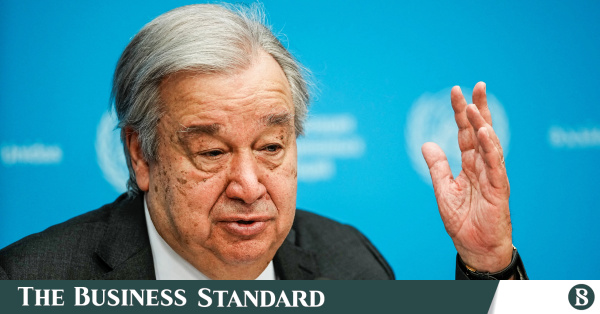
The process to select the next United Nations secretary-general is entering a critical stage, with incumbent Antonio Guterres due to step down on 31 December 2026.
Eight candidates are competing for the position, but the outcome will depend largely on negotiations among the five permanent members of the UN Security Council (UNSC), which holds the authority to recommend a candidate to the General Assembly, says Al Jazeera.
The selection process involves secret ballots, informal voting rounds and geopolitical negotiations. If the Security Council fails to agree on a successor before Guterres's term ends, the UN could face an unprecedented situation, as its charter does not explicitly address an unresolved selection.
How does the selection process work?
Under Article 97 of the UN Charter, the Security Council selects a candidate and recommends that person to the 193-member UN General Assembly (UNGA) for formal approval.
The Security Council has 15 members: five permanent members and 10 elected non-permanent members. The permanent members, known as the P5, are China, France, Russia, the United Kingdom and the US.
A candidate needs at least nine votes in favour of their recommendation and must avoid a veto from any of the five permanent members.
The 10 elected non-permanent members currently include Bahrain, Colombia, the Democratic Republic of the Congo, Denmark, Greece, Latvia, Liberia, Pakistan, Panama and Somalia.
Before a formal recommendation is made, the Security Council conducts informal and anonymous straw polls. Members indicate whether they want to "encourage" or "discourage" a candidate, or have "no opinion".
In later rounds, coloured paper ballots are introduced to distinguish votes cast by permanent members from those of non-permanent members. This helps identify whether a discouraging vote represents a potential veto by a permanent member.
The General Assembly then formally approves the Security Council's nominee. It has never rejected a candidate recommended by the council.
The main historical exception to the standard procedure occurred in 1950, when the General Assembly extended the incumbent secretary-general's term without a Security Council recommendation after the council reached a deadlock.
Rebeca Grynspan (Costa Rica)
Grynspan, who heads the UN Conference on Trade and Development (UNCTAD), led the eighth straw poll with 12 votes to encourage and three to discourage her candidacy.
She played a key role in brokering the 2022 Black Sea Grain Initiative.
If selected, she would become "the first woman and first Jewish person to lead the UN".
সংবাদ সূত্র
এই বিভাগের আরও খবর
 Collected · Not taken by usCollected
ট্রাম্প-পুতিনের ‘অদ্ভুত’ বন্ধুত্ব অনেকটা হিটলারের সঙ্গে বন্ধুত্বের কথা বলার মতো
২৭ নভে, ০৮:৩০ PM Collected · Not taken by usCollected
ইসরায়েলের হত্যাচেষ্টা থেকে বেঁচে গেলেন হামাস প্রধানের ছেলে
২৭ নভে, ০৭:৪৫ PM Collected · Not taken by usCollected