Making Bangladesh's energy transition sustainable
The current global energy crisis has renewed attention to the need to move away from fossil fuels. Countries heavily dependent on imported energy are more exposed to volatile fuel prices and disrupted international supply chains. Confronting this reality, Bangladesh, a growing industrial economy, n
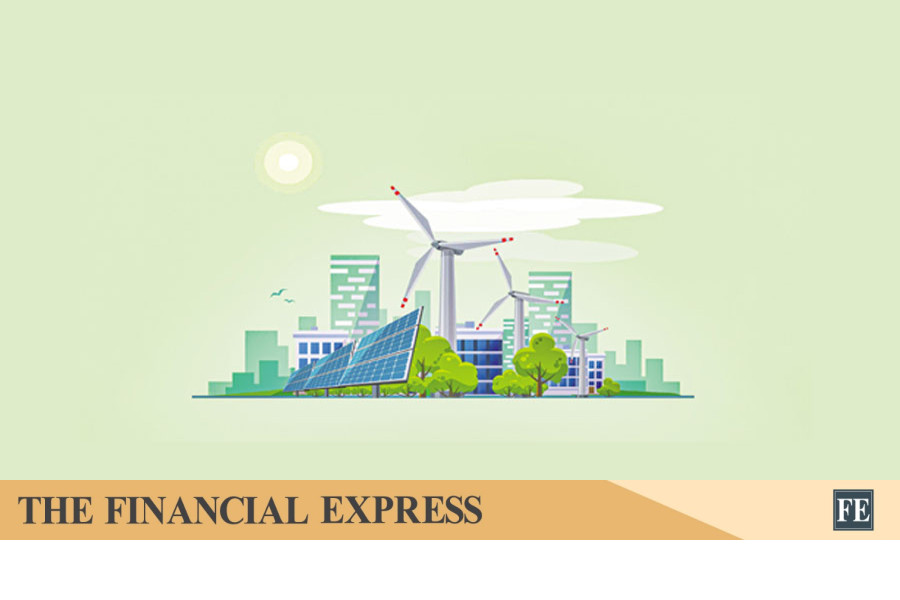
The current global energy crisis has renewed attention to the need to move away from fossil fuels. Countries heavily dependent on imported energy are more exposed to volatile fuel prices and disrupted international supply chains. Confronting this reality, Bangladesh, a growing industrial economy, needs to plan an energy transition to gain economic resilience, industrial competitiveness and sustainable development.
Bangladesh generated about 101,187 GWh of electricity in FY24-25, with peak generation reaching 16,603 MW, according to the Bangladesh Power Development Board's Annual Report 2024-25. Despite a large expansion in installed generation capacity, reliance on imported fossil fuels still leaves the energy system exposed to volatile international markets. With electricity demand expected to grow alongside industrialisation and economic development, diversifying the energy mix has become an increasingly important economic and strategic priority.
However, integrating renewable energy requires a systemic change in how energy is produced, distributed, financed and consumed, along with a fair sharing of costs and benefits among those involved. For Bangladesh, this means asking not just how much renewable capacity can be installed, but what kind of energy transition is achievable and sustainable in our development context.
International climate commitments and decarbonisation strategies increasingly shape national energy policies and investment priorities. Bangladesh has responded to the global emphasis on clean energy technologies, net-zero commitments and sustainable finance with its Renewable Energy Policy 2025, which aims to meet 20 per cent of electricity demand from renewable sources by 2030 and 30 per cent by 2040. But turning international frameworks into national results is not straightforward, particularly for developing economies in the Global South, where financial constraints, operational gaps and competing development pressures set the pace and shape of the transition. Unlike many developed economies, Bangladesh cannot focus on cutting emissions alone. It must deal at the same time with energy affordability, industrial expansion, job creation, climate adaptation and access to energy.
Solar energy has considerable potential in Bangladesh, and it is increasingly visible on the rooftops of factories, commercial buildings, educational institutions and public infrastructure. Solar-powered irrigation, cold storage, agrovoltaics and decentralised energy systems could also support rural livelihoods and strengthen resilience in climate-vulnerable communities. But whether these solutions work depends on more than the technology. Financing, connectivity, maintenance capacity, land use and affordability together limit access and determine who actually benefits.
This is why the idea of a sustainable and just transition matters. Renewable energy projects must take account of their wider environmental and social effects. Large solar farms, for instance, require careful thought about land availability, farming, local ecosystems and livelihoods. Floating solar may offer an alternative in some places, but its effects on fisheries, aquatic biodiversity and communities that depend on water bodies cannot be ignored. Likewise, the growing use of solar panels and batteries will eventually need proper systems for repair, recovery and recycling. Without lifecycle planning, today's clean energy solutions could become tomorrow's environmental burden.
An equally important question is who takes part in this transition and who benefits from it. Renewable energy creates opportunities for new industries, jobs and entrepreneurship, but these benefits will not arrive on their own. Small businesses, rural communities and cash-strapped industries may find it harder than large corporations to obtain renewable technologies, while under-represented groups may have little chance to take part in new energy-related jobs and enterprises. A sustainable transition must therefore consider not only the availability of technology but also how investment, opportunities and decision-making power are shared. This raises questions of energy justice: who owns the infrastructure, who can afford renewable technologies, who benefits from financial incentives and who bears the environmental and social costs of the transition?